
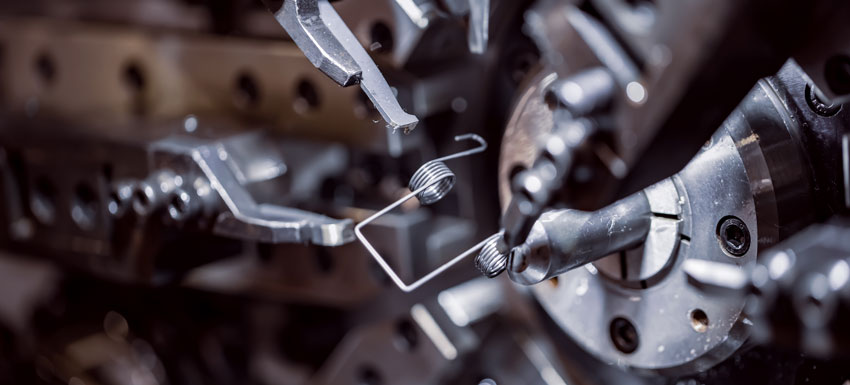
Monroe OEM supplies custom wire forms for OEMs, industrial manufacturers, and contract manufacturers that require formed metal wire components for fastening, retaining, guiding, supporting, connecting, or controlling movement. Wire forms are used across appliances, automotive products, HVAC systems, electronics, hardware, medical equipment, consumer goods, and industrial assemblies.
Custom wire forms are often designed to perform a specific mechanical function while using minimal material and space. Whether the application requires a simple retaining clip or a complex formed wire component, Monroe OEM helps customers source wire forms built around fit, function, quality, and dependable delivery.
Monroe OEM supports a wide range of custom wire form components for mechanical, industrial, electrical, and consumer product applications.
Common wire form types include:
Each wire form is sourced based on the customer’s drawings, samples, material requirements, bend geometry, dimensional tolerances, finish requirements, and production volumes.
Monroe OEM supports wire form programs based on customer specifications and application requirements. These components must provide consistent fit, function, and repeatability in the final assembly.
Important wire form requirements may include:
By reviewing the part’s function and production requirements, Monroe OEM can help identify the right sourcing strategy and manufacturing approach.
Material selection depends on strength, corrosion resistance, flexibility, spring performance, conductivity, environmental exposure, and cost targets. Monroe OEM can help customers evaluate material options based on the wire form’s operating conditions and mechanical requirements.
Common wire form materials include:
The right material helps ensure that the finished wire form performs reliably in the required application environment.
Wire form production may involve several forming and finishing processes depending on the design, material, and application. Monroe OEM supports production capabilities and value-added services that help deliver parts ready for assembly or installation.
Manufacturing and secondary operations may include:
These operations help improve consistency, durability, surface protection, and production readiness.
Design flexibility is one of the main advantages of custom wire forms. A properly designed wire form can often replace more complex components, reduce part weight, simplify assembly, or combine multiple functions into one part.
Custom wire forms can help customers:
Proper design and process control help maintain consistent geometry and performance over repeated production runs.
Wire forms are frequently sourced alongside related components used in mechanical, electrical, and industrial assemblies. Monroe OEM can help customers consolidate these components and reduce vendor complexity through one integrated sourcing program.
Related component categories may include:
This integrated sourcing approach helps customers simplify purchasing, coordinate production timing, and improve supply chain efficiency.
By partnering with Monroe OEM, customers gain access to sourcing support, qualified production capabilities, and program management focused on quality, cost control, and dependable delivery. Our team helps customers source custom wire forms that meet required specifications, support production schedules, and perform reliably in the final application.
Monroe OEM supports custom wire form programs built around repeatability, manufacturing efficiency, material performance, and long-term supply chain reliability.
Custom wire forms are used for fastening, retaining, guiding, supporting, connecting, spacing, protecting, or controlling movement within an assembly. They are commonly used in appliances, automotive products, HVAC systems, electronics, hardware, medical equipment, consumer goods, and industrial equipment.
Discuss your specifications, volumes, and sourcing objectives with our team. We provide fast, detailed responses supported by technical review and market-based pricing.
We use cookies to enhance your browsing experience, analyze site traffic, and personalize content. By clicking “Accept” you consent to our use of cookies.